


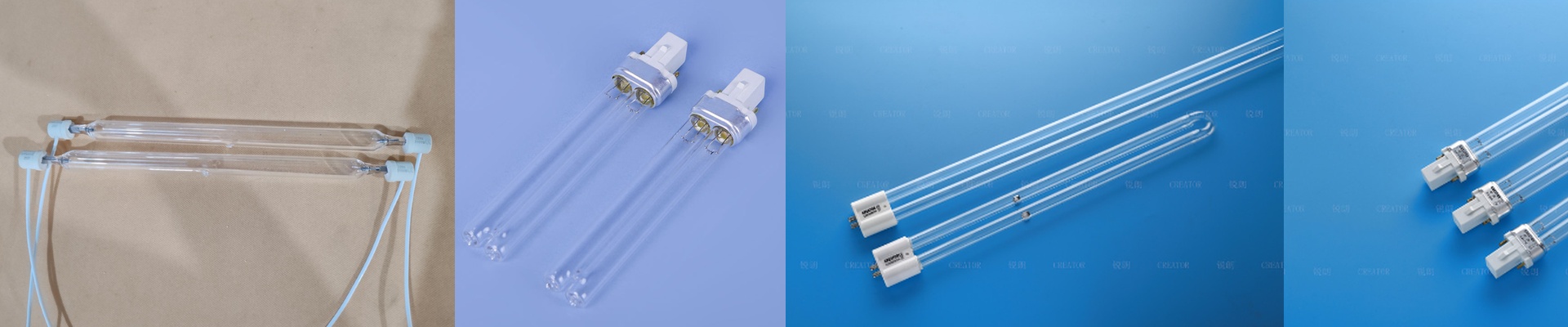
15 Years in the Trenches: What We Learned About UV Lamps
For the last 15 years, we were the “secret” team. We worked as an OEM, building UV lamps for the big global brands you’ve probably heard of. We spent a decade and a half in the factory, obsessing over the annoying stuff: Why do these lamps burn out too early? Why does the UV output drift after a few hours? Now, we’re cutting out the middleman and bringing everything we learned on the shop floor directly to you.
The gritty side of mercury physics
Here is how it works: you use an electric arc to excite mercury vapor, which kicks out a concentrated blast of UV-C and UV-B radiation. To get the kind of power you need for industrial curing or sterilization, we have to crank up the internal pressure. It works, but it puts a massive amount of stress on the quartz envelope. If you use cheap glass, it’ll crack or “solarize” under the heat. That’s why we stick to high-purity synthetic quartz. It can handle the thermal rollercoaster without giving up.
Stability is everything
A lamp that fluctuates is a headache. If your voltage dips, your curing speed drops, and suddenly your product isn’t setting right. We focus on tight tolerances for wattage and voltage. Why? Because when you swap in a replacement, you shouldn’t have to spend half your day recalibrating your entire production line. It should just work. We also tweaked the electrode geometry to stop “sputtering.” You know that annoying blackening you see at the ends of the tube? That’s sputtering. By cutting that down, the lamp lasts longer and the UV light actually penetrates the material instead of getting blocked by soot.
The honest truth about heat
Let’s be real: high output comes with a price, and that price is heat. These lamps pump out a lot of infrared radiation along with the UV. If you cram one of these into a tight housing at max wattage, you’re basically baking your reflectors. You’ve got to make sure your cooling fans and airflow are up to the task. If you don’t vent the heat, your lamp’s lifespan will tank by about 30%, no matter how well we built it. We aren’t going to tell you our lamps are “perfect.” We just build hardware that hits your spectral needs and can survive the beating of a 24/7 production environment.