


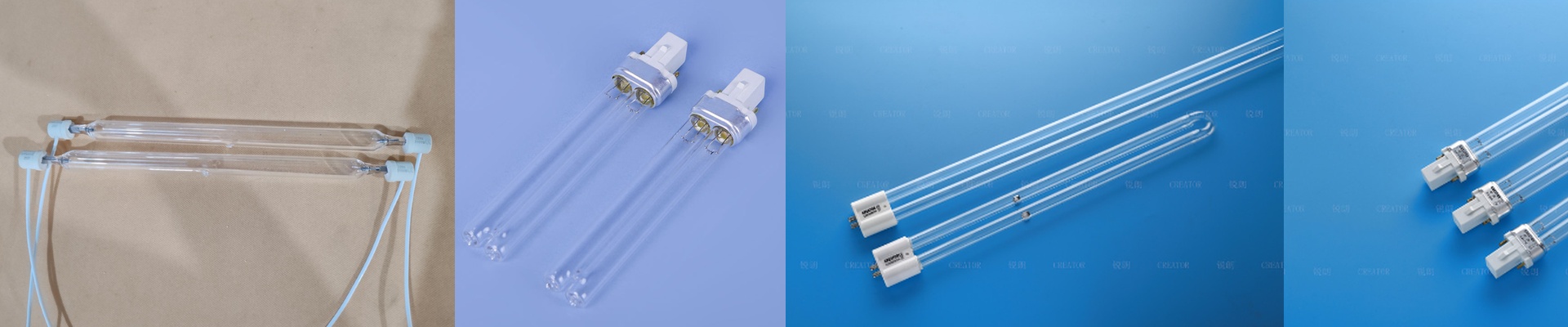


Getting Your UV Sterilization Right (Without the Headaches)
When we build germicidal UV modules for industrial lines, we aren’t just shipping you a box of lightbulbs. It’s more like precision tuning. We’re aiming for that sweet spot—usually 253.7nm—because that’s exactly where the light hits microbial DNA and shuts it down.
The Trick to Power and Heat
The biggest worry in a high-volume setup is “cold spots.” You know, those annoying gaps where bacteria can hide and survive because the light wasn’t strong enough. We obsess over the irradiance ($\mu W/cm^2$) to make sure the power is steady from one end of the tube to the other. But here’s the catch: if you crank up the wattage to speed up your production, the tubes get hot. Really hot. If your housing doesn’t have enough airflow, the quartz can overheat. Once that happens, your spectral output shifts, and suddenly your sterilization rate tanks.Keep it cool, or you’re just wasting electricity.
Better Glass, Better Fits
We use high-transmittance fused quartz because it basically gets out of the way, letting those UVC rays fly through without getting absorbed by the glass itself. We also learned a lesson with the 2026 printing exhibition modules. Standard sockets just weren’t cutting it in humid environments—they were arcing over. So, we ditched the off-the-shelf stuff for custom connectors that actually hold up. If you’re swapping these into an old array, just double-check your ballast. If the starting voltage doesn’t match the bulb, you’ll fry the filaments way sooner than you should. It’s a frustrating mistake that’s easy to avoid.
Making It Work in the Real World
When you’re wiring these into a massive system, layout is everything. We usually suggest a staggered array. Why? Because it creates an overlap that kills any chance of a gap in coverage. And a heads-up on maintenance: these bulbs usually give you 8,000 to 12,000 hours. The tricky part is that they’ll still glow blue even after they’ve stopped actually sterilizing. It’s a total optical illusion. Instead of just trusting a timer on the wall, grab a UV radiometer. It’s the only way to know for sure if your output is still where it needs to be.